Composite Chart Explained: What Your Relationship Looks Like as Its Own Person

The first time someone read my composite chart, I remember thinking: wait, this isn't about either of us — it's about the relationship itself, like it's a third person in the room. That's exactly the point. While a synastry chart compares two people side by side, a composite chart asks a stranger question: if your relationship had its own birthday, its own personality, its own Sun sign — what would it look like?
If you read our synastry guide and felt like something was still missing, this is probably what you were looking for. Composite charts show you the entity you and your partner create together. Not him. Not her. Not you. The third thing.
Composite vs Synastry: They're Not the Same Thing
People mix these up constantly, so let's settle it.
Synastry overlays two birth charts and looks at how your planets interact with theirs. His Mars on your Venus. Her Moon trine your Sun. It's a conversation between two separate identities.
Composite takes the midpoints between every pair of planets in both charts and creates a single, brand-new chart. Your Sun is at 5° Leo, his Sun is at 5° Aquarius? The composite Sun lands at 5° Taurus (the midpoint). The result isn't either of you — it's the relationship as its own creature, with its own ascendant, its own Moon sign, its own Mars.
Use synastry to understand chemistry. Use composite to understand the relationship's character — what it wants, where it's going, what it's here to do.
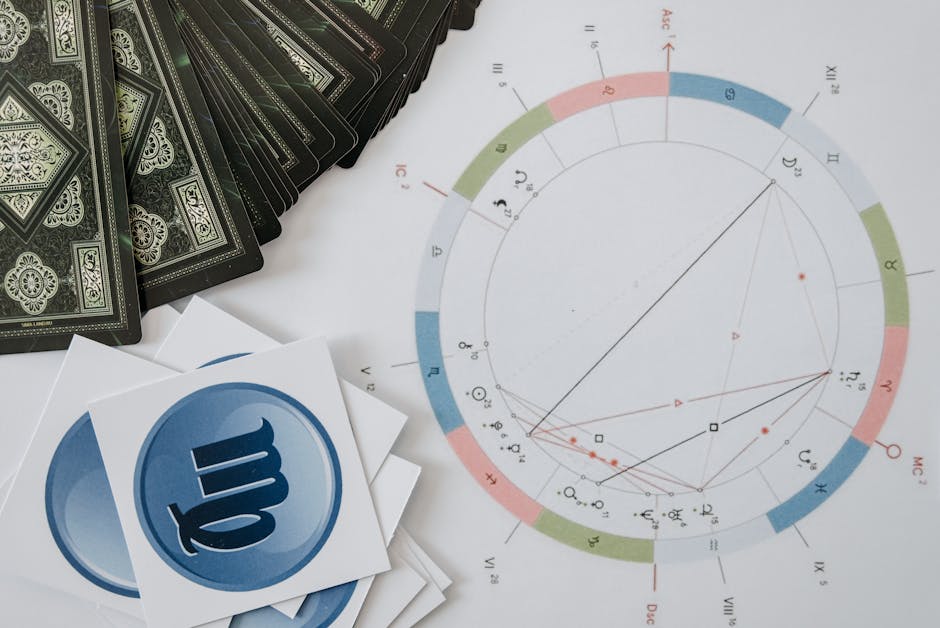
How a Composite Chart is Calculated
The math is straightforward, even if it sounds technical. For every planet, you find the midpoint between where it sits in person A's chart and where it sits in person B's chart. Same for the Ascendant, Midheaven, and house cusps.
You don't have to do this by hand. Free tools like Astro.com and Astro-Seek will generate it in seconds — you just need both birth dates, times, and locations. Birth time matters here. Without accurate times, the composite Ascendant, Midheaven, and house placements are essentially noise.
One quick note: there are two common methods — the midpoint method (most popular, what I'm describing here) and the Davison method (which uses the actual midpoint in time and space between your births). Davison creates a "real" chart that could have existed; midpoint creates a symbolic one. For everyday relationship reading, midpoint is the standard.
The Composite Sun: What Your Relationship Is
This is the heart of the chart. The composite Sun describes the core identity of your relationship — its personality, its purpose, what it shines at.
- Composite Sun in Aries — A relationship that thrives on action, challenges, and starting things. You build energy together. Stagnation kills it.
- Composite Sun in Cancer — Home-centered. This is the couple that turns their apartment into a sanctuary, who feel like family even before they are.
- Composite Sun in Libra — A relationship built on partnership itself. Aesthetics matter. Fairness matters. Conflict feels physically uncomfortable.
- Composite Sun in Scorpio — Intense, transformative, sometimes turbulent. This relationship will change both of you. There's no staying surface-level.
- Composite Sun in Capricorn — Long game. Built to last, built for ambition, built around shared goals more than shared feelings.
The house your composite Sun falls in tells you where the relationship lives — 7th house composite Sun is publicly partnered, 4th house is private and home-based, 10th house is career-coded.
The Composite Moon: How Your Relationship Feels
If the Sun is the relationship's identity, the Moon is its emotional climate. This is what your relationship feels like to live inside, day to day.
A composite Moon in Pisces creates a dreamy, almost merged emotional space — beautiful, but with blurry boundaries. Capricorn Moon couples are emotionally restrained but deeply loyal — feelings are shown through showing up, not saying. Sagittarius Moon needs freedom to feel safe — a clingy structure suffocates it. Taurus Moon wants comfort, predictability, good food, soft touch.
Pay attention to composite Moon aspects. A composite Moon square Saturn is one of the harder placements — it can feel like the relationship is always carrying weight, even in good times. A composite Moon trine Venus, by contrast, is one of the most genuinely pleasant emotional climates you can have.
Composite Venus and Mars: The Love and the Heat
Venus in the composite chart shows what the relationship values, how it expresses affection, and what makes it feel loved. Mars shows how it fights, how it pursues, and how it generates physical and creative energy.
When composite Venus and Mars are in harmonious aspect (trine, sextile, conjunction), love and desire flow together — affection and attraction reinforce each other. When they're squared or opposed, you might feel desire without tenderness, or tenderness without spark. Neither is doomed. They just describe what the relationship has to work with.
Composite Venus in the 5th house is famously playful and romantic. In the 8th house, it's intense, sometimes obsessive, often transformational. Composite Mars in the 7th can mean a lot of arguing — but also a lot of magnetic pull. In the 12th, conflict goes underground and resurfaces sideways.
Composite Houses That Tell You the Most
You don't need to read all 12 houses. These four carry most of the story:
- 1st house — How the relationship presents to the outside world. What people notice about you as a couple.
- 4th house — The private, internal life of the relationship. What it feels like behind closed doors.
- 7th house — How you partner. Whether the relationship behaves like a true partnership or has power imbalances.
- 10th house — The relationship's public role and long-term direction. Where it's going.
A heavy 4th house composite (lots of planets there) often describes couples who feel "homey" together — they may even live together quickly, or build a strong family unit. A heavy 10th house composite often describes couples who do something together publicly — work partners, creative collaborators, the couple everyone associates with a shared project.
Composite Aspects Worth Knowing
A few aspects show up so often in long-term couples that they deserve their own callout:
- Composite Sun conjunct Venus — The relationship feels good. Period. There's natural warmth and ease at the core.
- Composite Saturn conjunct Sun, Moon, or Venus — Builds longevity, but adds weight. These are the relationships that endure but can feel heavy. Often present in marriages and lifelong partnerships.
- Composite Pluto aspects to personal planets — Transformation. This relationship will change you, sometimes painfully. Pluto-heavy composites are rarely casual.
- Composite Jupiter on the Ascendant — A relationship that expands both people. Optimism, growth, shared adventure.
- Composite Neptune on Venus or the Moon — Romantic, idealizing, sometimes deceptive. Watch for projection — are you in love with the person, or with what you imagine them to be?
When to Pull Out a Composite Chart
Composite charts are most useful when you've moved past "is there chemistry?" into "what is this thing actually?" Some moments where I've found them genuinely clarifying:
- About 6–12 months in, when the initial chemistry settles and you're trying to figure out what you've actually built
- Before a big decision — moving in, marrying, starting a business together
- When a relationship that "looks great on paper" (good synastry) keeps hitting walls — the composite often shows why
- For non-romantic partnerships too: business partners, creative collaborators, even close friendships have composite charts
I'd skip composite reading for very new dating-app matches. The chart describes a relationship, and if there isn't really one yet, you're reading potential rather than reality. Synastry is more useful at that stage.
Limitations to Stay Honest About
A composite chart is symbolic. It does not predict whether you'll stay together, and it does not "rate" a relationship out of ten. Plenty of couples with difficult composites stay happily together for fifty years because they keep choosing each other. Plenty of couples with picture-perfect composites split up because they didn't do the work.
The chart shows the raw material. What you build with it is up to you.
Also: you need accurate birth times for both people. Without them, the houses and angles are guesses, and a lot of the most useful information lives in the houses and angles.
How to Actually Read One Tonight
Here's a five-step approach if you generated a chart and don't know where to start:
- Find the composite Sun. Note the sign and house. That's your relationship's core identity.
- Find the composite Moon. Sign and house again. That's the emotional climate.
- Look at the Ascendant sign. That's the public face — how the world sees you as a couple.
- Scan for any planet conjunct an angle (1st, 4th, 7th, 10th house cusps). Those are loud — they color the whole chart.
- Check Venus and Mars aspects. Are they in flowing aspects to each other and to the Sun/Moon? That's your love-and-desire story.
You don't need to interpret every degree. Sun, Moon, Ascendant, Venus, Mars, plus any tight aspects to those — that gets you 80% of the way to a useful read.
The Relationship as Its Own Person
What I love about composite charts is that they invite you to treat your relationship like a third entity worth knowing. Not "are we compatible," not "does he love me," but: what is this thing we've made, and what does it want? That question alone often shifts how people show up in love.
If you want to go deeper into compatibility before tackling composite, start with our synastry guide — that gives you the foundation. From there, the composite chart is the next step.
Curious what your composite chart looks like? Try the HoroAura compatibility tool — enter both birth details and see your relationship's personality in minutes.
Want your free daily reading?
Start free